Forest-Friendly Luxury Cabins Guide With Eco-Friendly Travel, Comfort, and Forest Living
Forest-friendly luxury cabins combine comfortable accommodation with design approaches intended to reduce pressure on surrounding natural environments. These cabins are commonly located in wooded landscapes, mountain areas, rural regions, and other places where visitors can experience forest living while remaining in a structured accommodation setting.
Their design can include energy-efficient systems, locally appropriate materials, water-management features, and layouts that limit unnecessary disturbance to the surrounding landscape.
The concept developed from several overlapping travel trends. Nature tourism encouraged travelers to spend time in forests and rural landscapes, while sustainable tourism increased attention toward energy use, waste, water consumption, construction materials, and relationships with local communities. Luxury cabin development added another dimension by combining outdoor surroundings with comfortable interiors.
A forest-friendly cabin may include insulation, efficient heating or cooling, natural lighting, renewable energy systems, rainwater collection, low-impact lighting, and carefully planned wastewater management. However, a cabin should not automatically be considered environmentally responsible simply because it is located in a forest. Its actual environmental effect depends on construction methods, land use, utilities, transportation, resource consumption, and ongoing management.
What Makes a Cabin Forest-Friendly?
Several characteristics can contribute to a lower-impact cabin design. The building footprint is one consideration because a smaller disturbed area can reduce the amount of vegetation and soil affected during construction.
Other considerations include:
Energy-efficient insulation and windows
Efficient heating and cooling systems
Renewable electricity where appropriate
Low-energy lighting
Water-efficient fixtures
Rainwater management
Responsible wastewater treatment
Durable construction materials
Locally appropriate landscaping
Waste separation and reduction
Minimal outdoor lighting
Designs that avoid unnecessary tree removal
These features work together rather than functioning as isolated environmental measures. A cabin with efficient lighting may still have a substantial environmental footprint if its construction requires extensive land clearing or if guests must travel long distances by private vehicle.
Luxury and Forest Living
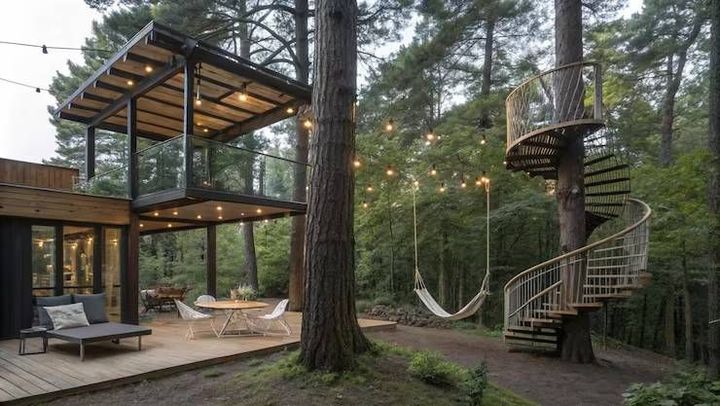
Luxury in a forest cabin can involve comfort, privacy, thoughtful interior design, natural views, quiet surroundings, and well-planned spaces rather than excessive resource consumption. Large windows can provide views and daylight, while insulation and efficient climate control can maintain indoor comfort.
Forest living can also encourage a closer relationship with natural surroundings. Outdoor decks, walking paths, observation areas, and natural landscaping can allow visitors to experience the environment without requiring extensive recreational infrastructure.
Importance
Forest-friendly luxury cabins matter because tourism development can create both economic and environmental effects in natural areas. Construction, transportation, water use, energy consumption, wastewater, waste generation, and visitor activity can all influence surrounding ecosystems.
Thoughtful cabin planning attempts to balance visitor comfort with responsible land use. This is particularly relevant in forest areas where vegetation, wildlife habitats, soil conditions, water systems, and scenic landscapes may be sensitive to development.
Who It Affects
Forest cabin development can affect several groups:
Travelers seeking nature-based accommodation
Local communities
Landowners and property managers
Forest and wildlife authorities
Architects and construction teams
Tourism operators
Conservation organizations
Local agricultural and food producers
The surrounding community can also influence the character of a cabin destination. Locally sourced materials, local food systems, cultural activities, and community-based tourism can connect visitors with the region without turning natural areas into heavily developed destinations.
Managing Environmental Pressure
Cabins located in forests can face specific environmental considerations. Roads and construction access may disturb soil and vegetation, while excessive nighttime lighting can affect wildlife behavior.
Water availability can also be important. A cabin may require water for drinking, bathing, cooking, cleaning, and landscaping. In areas with limited water resources, efficient fixtures and carefully planned water systems can reduce pressure on local supplies.
Wastewater requires particular attention because untreated discharge can affect soil and nearby waterways. Appropriate treatment and disposal systems should be designed according to local environmental conditions and regulatory requirements.
Comfort Without Excessive Resource Use
Comfort and environmental awareness do not necessarily require completely different building approaches. Insulation can improve indoor temperature stability while also reducing heating and cooling requirements. Proper building orientation can increase useful daylight and influence passive heating or cooling.
Durable materials can reduce the frequency of replacement, while repairable furniture and fixtures can extend the usable life of interior components. These considerations can be incorporated into cabin planning without removing the comfort associated with a luxury travel experience.
Recent Updates
From 2024 through 2026, nature-based tourism and sustainable accommodation have continued to receive attention as travelers and tourism planners examine environmental impacts, resource use, and destination resilience. The broader trend includes energy efficiency, responsible construction, digital planning, water management, and greater awareness of biodiversity.
Energy-Efficient Cabin Design
Cabin design increasingly considers the building envelope as part of overall energy management. Insulation, airtight construction, efficient windows, shading, heat pumps, and intelligent controls can influence heating and cooling requirements.
Renewable electricity can also be incorporated where local conditions make it practical. Solar systems, battery storage, and energy-monitoring equipment may support cabin operations, although their suitability depends on climate, building demand, site conditions, and grid availability.
Low-Impact Construction
Construction methods are receiving greater attention in environmentally conscious accommodation projects. Modular construction, prefabricated components, responsibly sourced timber, recycled materials, and efficient material planning can reduce certain construction impacts.
Site planning is equally important. Positioning cabins around existing vegetation, using established access routes, and limiting unnecessary excavation can help reduce disturbance during development.
Biodiversity Awareness
Forest accommodation increasingly needs to consider biodiversity rather than focusing only on energy and materials. Wildlife corridors, native vegetation, reduced nighttime lighting, and controlled visitor pathways can help limit certain forms of ecological disturbance.
Landscaping can play a role as well. Planting species appropriate to the local ecosystem can provide habitat and reduce the need for intensive irrigation or chemical management.
Smart Cabin Monitoring
Digital building controls are increasingly used to monitor energy, water, temperature, humidity, and occupancy. Automated controls can adjust lighting or climate systems according to defined operating conditions.
Monitoring can also help property managers identify unusual water consumption, equipment problems, or energy patterns. Data does not by itself make a cabin environmentally responsible, but it can provide information for managing resource use.
Laws or Policies
Forest-friendly luxury cabins are affected by land-use regulations, building requirements, environmental protection rules, tourism regulations, water and wastewater requirements, and local planning policies. Exact requirements differ substantially between jurisdictions and between forest types.
Land and Forest Protection
Building in or near forested areas may require land-use approval, environmental assessment, planning permission, or restrictions related to protected landscapes. Some areas may have limits on tree removal, road construction, building density, or changes to natural drainage.
Protected forests and conservation areas can have additional restrictions. A project located near wildlife habitat, wetlands, rivers, or other sensitive areas may also be subject to environmental review.
Building and Safety Requirements
Cabins need to comply with applicable building and structural requirements. Depending on location, these may address foundations, structural strength, fire protection, electrical systems, plumbing, ventilation, accessibility, emergency exits, and weather resistance.
Forest locations can also create additional considerations related to wildfire exposure, storms, flooding, snow, landslides, or other environmental hazards. The relevant requirements depend on local geography and regulations.
Water and Wastewater
Water use and wastewater management are important regulatory areas for remote cabins. Properties without access to centralized systems may require approved wells, storage systems, septic systems, wastewater treatment, or other infrastructure.
Rainwater collection may also be regulated in some jurisdictions. Waste separation, sewage management, and disposal procedures need to follow the rules applicable to the property.
Tourism and Visitor Management
Tourism regulations may govern accommodation registration, occupancy, fire safety, sanitation, accessibility, taxation, and land use. Additional rules can apply when cabins are located within protected landscapes or culturally significant areas.
Tools and Resources
Planning a forest-friendly cabin can involve several digital and physical resources. Site-mapping platforms can help examine terrain, vegetation, water features, roads, slopes, and nearby infrastructure before detailed design work begins.
Energy modeling tools can estimate heating and cooling requirements based on building size, insulation, windows, climate, and occupancy. Water-use calculators can estimate demand from showers, toilets, kitchens, laundry, and other activities.
Useful resources include:
Site and terrain mapping tools
Building energy calculators
Solar potential assessment tools
Water-use calculators
Wastewater planning worksheets
Sustainable material databases
Building design software
Environmental impact assessment templates
Biodiversity planning guides
Cabin maintenance schedules
Emergency preparedness checklists
Waste management plans
A simplified comparison of cabin approaches is shown below:
| Cabin Approach | Main Characteristic | Environmental Planning Focus |
|---|---|---|
| Small Forest Cabin | Compact accommodation | Land disturbance |
| Modular Cabin | Prefabricated components | Construction efficiency |
| Off-Grid Cabin | Limited connection to utilities | Energy and water management |
| Passive Design Cabin | Building-focused efficiency | Orientation and insulation |
| Eco-Luxury Cabin | Comfort with environmental features | Resource management |
| Nature Retreat Cabin | Strong outdoor connection | Biodiversity and visitor movement |
Digital design tools can also help examine cabin orientation, solar exposure, terrain conditions, building placement, and access routes. Combining these tools with site-specific environmental information provides a more complete picture of potential impacts.
FAQs
What are forest-friendly luxury cabins?
Forest-friendly luxury cabins are comfortable accommodations designed with attention to environmental factors such as land disturbance, energy use, water consumption, materials, waste, and biodiversity.
What features make a luxury cabin eco-friendly?
Features can include efficient insulation, renewable energy systems, water-efficient fixtures, responsible wastewater treatment, low-energy lighting, durable materials, native landscaping, and limited outdoor lighting.
Are forest-friendly luxury cabins suitable for eco-friendly travel?
They can form part of eco-friendly travel when their construction, operation, transportation requirements, resource use, and relationship with the surrounding environment are managed responsibly. The location alone does not determine environmental performance.
How do forest-friendly cabins reduce environmental impact?
Potential approaches include limiting land disturbance, reducing energy and water consumption, managing wastewater, reducing waste, protecting vegetation, and designing outdoor areas with local biodiversity in mind.
What rules apply to forest cabin development?
Rules can include land-use planning, building regulations, environmental protection, forestry restrictions, water and wastewater requirements, fire safety provisions, and tourism accommodation regulations. Requirements vary according to the location and type of land.
Conclusion
Forest-friendly luxury cabins combine comfortable accommodation with planning approaches that consider land, energy, water, materials, waste, and biodiversity. Eco-friendly travel in forest environments depends on more than cabin design because transportation, construction, visitor behavior, and local environmental conditions also influence overall impact. Recent developments emphasize energy efficiency, low-impact construction, resource monitoring, biodiversity awareness, and careful site planning. Applicable land-use, building, environmental, water, and tourism requirements remain important parts of responsible forest accommodation development.