How to Implement Commercial HVAC Automation: Complete Guide
Learn how commercial HVAC automation reduces energy costs by 20-30%, improves comfort control, and streamlines facility management through intelligent system integration and real-time monitoring.
Commercial HVAC automation represents a fundamental shift in how facilities manage heating, cooling, and ventilation systems. Rather than relying on manual adjustments or basic fixed schedules, automated systems use sensors, controllers, and software to continuously monitor conditions and optimize performance in real time. For facility managers, building owners, and energy directors, understanding automation capabilities—from simple thermostat upgrades to enterprise-level Building Management Systems—is critical for reducing operational costs, improving occupant comfort, and meeting sustainability goals.
Core Benefits and Practical Limitations of HVAC Automation
Automated HVAC systems deliver measurable performance improvements across multiple dimensions. Energy consumption typically decreases by 20-30% through optimized scheduling, demand-response capabilities, and equipment efficiency enhancements. This reduction translates directly to lower utility bills—a critical metric for facilities with annual HVAC budgets exceeding hundreds of thousands of dollars.
Occupant comfort improves through zone-based temperature control, which allows different areas of a building to maintain independent setpoints based on actual usage patterns. Humidity management becomes more precise, reducing thermal discomfort and improving indoor air quality. Automated demand-controlled ventilation (DCV) systems adjust fresh air intake based on occupancy and CO2 levels, preventing over-ventilation during unoccupied periods while maintaining healthy indoor environments.
Maintenance efficiency gains emerge from predictive monitoring capabilities. Sensors track equipment performance metrics—compressor cycling frequency, refrigerant pressure, airflow rates—and alert technicians to potential failures before they occur. This approach reduces emergency service calls, extends equipment lifespan, and allows maintenance scheduling during planned downtime rather than crisis response.
However, automation systems present legitimate limitations. Initial capital investment ranges from $5,000-$50,000+ depending on system complexity and building size. Integration with legacy HVAC equipment often requires retrofitting sensors and control hardware, adding installation costs and complexity. Cybersecurity becomes a concern when systems connect to networks or cloud platforms, requiring robust data protection protocols. Staff training is necessary to effectively operate and troubleshoot automated systems, and ongoing software updates and technical support add recurring expenses.
Types of Commercial HVAC Automation Systems
Commercial automation solutions exist across a spectrum of complexity and capability, each serving different operational needs and building scales.
Programmable Thermostats and Basic Controls
Entry-level automation begins with programmable thermostats that allow facility managers to set temperature schedules across different times of day and days of the week. These devices store multiple daily schedules and can override setpoints based on manual input. Typical models offer 7-day programming with 4-6 setpoint changes per day. Cost ranges from $200-$800 per unit, with installation requiring basic electrical work. Limitations include lack of occupancy sensing, inability to integrate with other building systems, and no remote access or data analytics.
Smart Thermostats with Remote Access
Mid-level solutions add wireless connectivity, allowing facility managers to adjust setpoints and view temperature data from mobile devices or web interfaces. These systems often include basic occupancy sensors, weather-responsive adjustments, and energy usage reports. Integration with building WiFi networks enables remote monitoring across multiple locations. Cost typically ranges from $800-$2,500 per unit plus installation. Trade-offs include limited integration with other HVAC equipment (compressors, fans, dampers) and reliance on internet connectivity for full functionality.
Building Management Systems (BMS)
Enterprise-level automation integrates HVAC with lighting, security, fire safety, and other building systems through centralized software platforms. BMS solutions use networked sensors throughout buildings to monitor temperature, humidity, CO2, occupancy, and equipment performance. Advanced algorithms optimize equipment scheduling across multiple zones, coordinate with demand-response programs, and generate detailed energy analytics. Systems can manage hundreds of buildings from a single interface. Cost ranges from $15,000-$100,000+ for implementation, with annual software licensing and support fees. BMS platforms require IT infrastructure, cybersecurity protocols, and specialized staff training.
IoT-Based Distributed Control Systems
Newer distributed systems deploy edge computing devices throughout buildings rather than centralizing all logic in a single platform. Individual controllers manage local HVAC equipment while communicating with cloud platforms for analytics and optimization. This architecture provides redundancy—systems continue operating if network connectivity fails—while enabling machine learning algorithms to improve performance over time. Cost varies widely based on building size and sensor density, typically $10,000-$75,000 for implementation.
Current Industry Trends and Technological Innovations
The commercial HVAC automation landscape is evolving rapidly, driven by energy efficiency mandates, occupant health priorities, and advancing technology.
Artificial Intelligence and Predictive Maintenance: Machine learning algorithms analyze historical equipment performance data to predict failures weeks or months in advance. Systems learn individual building behavior patterns and automatically adjust control strategies to optimize energy use while maintaining comfort. AI-driven systems reduce maintenance costs by 15-25% through targeted interventions rather than reactive repairs.
Occupancy-Based Scheduling: Advanced occupancy sensors using motion detection, door sensors, and calendar integration automatically adjust HVAC setpoints based on actual building usage. Systems can distinguish between occupied and unoccupied zones, reducing energy waste in underutilized areas. Some systems integrate with employee badge systems or mobile devices to anticipate occupancy patterns.
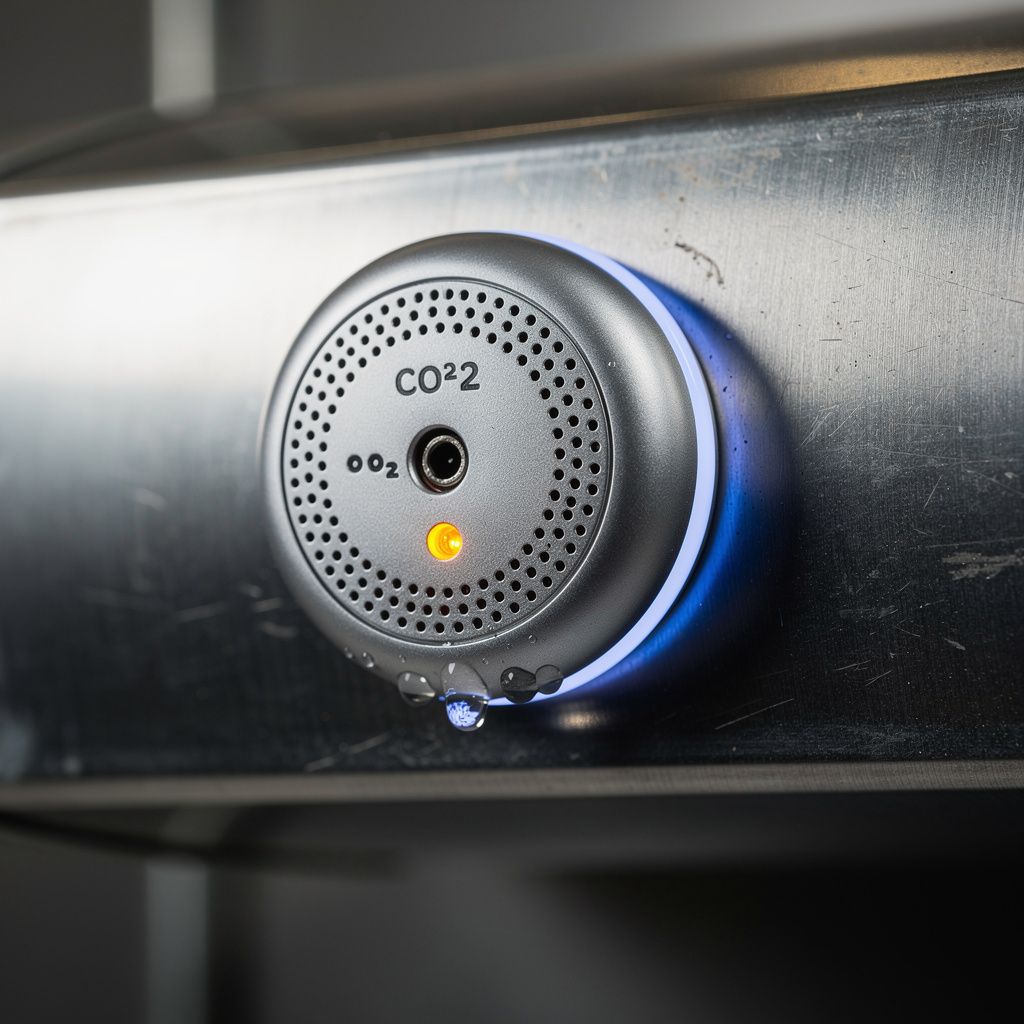
Demand-Controlled Ventilation (DCV): CO2 sensors measure indoor air quality and automatically adjust fresh air intake rates. Rather than maintaining fixed ventilation rates regardless of occupancy, DCV systems reduce ventilation during low-occupancy periods and increase it when spaces fill up. This approach can reduce ventilation energy consumption by 30-40% while maintaining indoor air quality standards.
Integration with Renewable Energy and Energy Storage: Automation systems increasingly coordinate HVAC operation with on-site solar generation, battery storage, and grid demand-response programs. Systems can shift cooling loads to periods of peak solar generation or low electricity prices, reducing demand charges and grid stress.
Cloud-Based Analytics and Benchmarking: Modern platforms collect performance data from thousands of buildings, enabling facility managers to benchmark their HVAC efficiency against similar properties. Automated alerts identify underperforming equipment or control strategies, and software recommendations suggest optimization opportunities.
Key Features and Specifications to Evaluate
When assessing automation solutions, facility managers should evaluate these technical and operational criteria:
| Feature Category | Key Specifications | Impact on Performance |
|---|---|---|
| Sensor Coverage | Temperature, humidity, CO2, occupancy, airflow sensors; placement density | Determines control precision and ability to detect comfort issues or equipment problems |
| Control Granularity | Number of zones, independent setpoint control, damper modulation capability | Affects energy savings and ability to maintain comfort in diverse building areas |
| Integration Capability | API support, compatibility with existing equipment, data format standards | Determines whether system works with current infrastructure or requires replacement |
| Remote Access | Web interface, mobile app, multi-user permissions, real-time alerts | Enables facility managers to respond quickly to issues and monitor performance remotely |
| Data Analytics | Energy consumption reports, equipment runtime analysis, fault detection | Provides visibility into performance trends and identifies optimization opportunities |
| Cybersecurity | Encryption, authentication protocols, network isolation options, update procedures | Protects building systems from unauthorized access and data breaches |
| Scalability | Number of devices supported, multi-building management, cloud infrastructure | Determines whether system can grow with facility needs or requires replacement |
| Uptime and Redundancy | System availability guarantees, backup control capabilities, failover mechanisms | Ensures HVAC continues operating if automation system fails or loses connectivity |
Industry Landscape and Notable Implementations
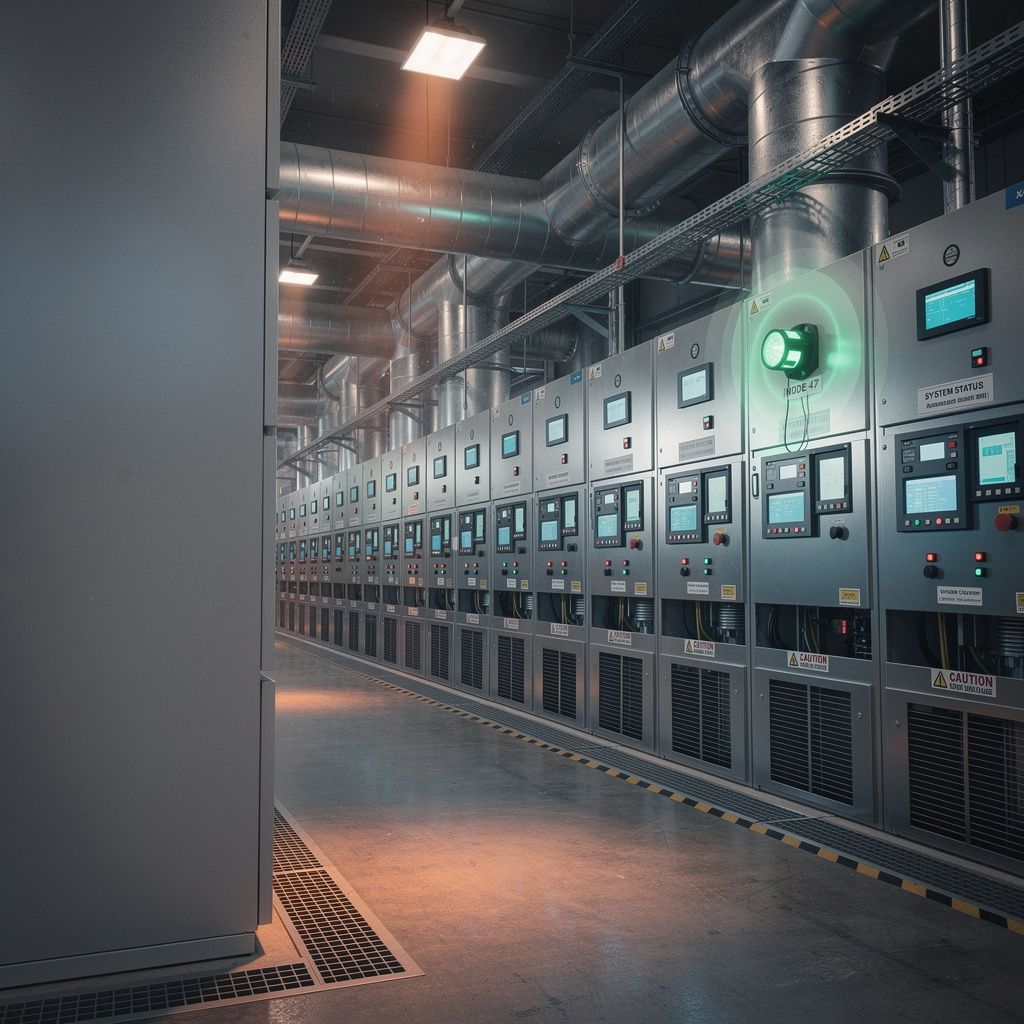
Commercial HVAC automation is now standard practice across major building categories. Corporate office buildings increasingly deploy BMS systems to optimize energy use across thousands of square feet of workspace. Hospitals implement automation to maintain precise temperature and humidity control in operating rooms, patient care areas, and research facilities—critical requirements where comfort directly impacts outcomes. Retail facilities use occupancy-based scheduling to reduce HVAC operation during off-peak hours. Data centers employ sophisticated automation to manage extreme cooling loads while preventing equipment overheating.
Real-world case studies demonstrate measurable results. A 500,000-square-foot office complex reduced annual HVAC energy consumption by 28% through BMS implementation, saving approximately $180,000 annually. A hospital network deployed predictive maintenance algorithms across 15 facilities, reducing emergency HVAC service calls by 40% and extending equipment lifespan by an average of 3 years. A retail chain implemented occupancy-based scheduling across 200 locations, achieving 22% average energy reduction while maintaining customer comfort standards.
Selection and Decision-Making Framework
Choosing the appropriate automation solution requires systematic evaluation of facility characteristics, operational priorities, and financial constraints.
Step 1: Define Operational Objectives
Identify primary goals: energy cost reduction, occupant comfort improvement, maintenance efficiency, sustainability reporting, or regulatory compliance. Different automation levels serve different priorities. If primary goal is energy reduction, demand-controlled ventilation and occupancy-based scheduling are essential features. If maintenance efficiency is paramount, predictive monitoring capabilities become critical. If sustainability reporting drives decisions, systems must provide detailed energy consumption data and emissions tracking.
Step 2: Assess Existing Infrastructure
Evaluate current HVAC equipment age, control capabilities, and sensor availability. Newer equipment often includes compatible control interfaces, reducing integration complexity. Older systems may require extensive retrofitting. Determine whether existing building automation infrastructure exists and whether new systems can integrate with it. Assess network infrastructure—WiFi coverage, cybersecurity protocols, IT support availability—necessary for cloud-connected systems.
Step 3: Calculate Financial Impact
Estimate annual energy costs and potential savings based on system type and building characteristics. Typical payback periods range from 3-7 years for mid-level automation, 5-10 years for enterprise BMS systems. Calculate maintenance cost reductions from predictive monitoring. Factor in installation costs, ongoing software licensing, and staff training requirements. Compare total cost of ownership across different solution tiers.
Step 4: Evaluate Vendor Capabilities
Assess vendor experience with similar building types and sizes. Review customer references and case studies demonstrating actual performance improvements. Evaluate technical support availability, training programs, and software update frequency. Understand cybersecurity protocols and data privacy practices. Clarify licensing models—perpetual licenses versus subscription-based—and long-term cost implications.
Step 5: Plan Implementation and Integration
Develop detailed implementation timeline accounting for equipment procurement, installation, testing, and staff training. Identify integration points with existing systems and potential compatibility issues. Plan for phased rollout if deploying across multiple buildings. Establish baseline performance metrics before implementation to measure actual improvements post-deployment.
Actionable Tips and Practical Best Practices
- Start with energy audit: Before implementing automation, conduct professional energy audit identifying current consumption patterns, equipment efficiency issues, and optimization opportunities. This baseline enables accurate ROI calculation and helps prioritize automation features.
- Implement occupancy-based scheduling first: This single feature often delivers 15-20% energy savings with relatively modest investment. Use motion sensors and calendar integration to eliminate HVAC operation in unoccupied spaces during nights and weekends.
- Establish clear setpoint policies: Define temperature and humidity ranges for different building areas and times of day. Document these policies in system configuration to ensure consistent operation and prevent manual overrides that undermine automation benefits.
- Monitor equipment performance metrics: Track compressor runtime, equipment cycling frequency, and sensor readings to identify underperforming equipment before failures occur. Establish alert thresholds that trigger maintenance technician notification.
- Train staff comprehensively: Ensure facility managers and technicians understand system capabilities, data interpretation, and troubleshooting procedures. Well-trained staff maximize system benefits and catch issues early.
- Implement cybersecurity protocols: For cloud-connected systems, enforce strong password policies, enable multi-factor authentication, isolate HVAC networks from critical building systems, and maintain regular software updates.
- Schedule regular system reviews: Quarterly reviews of automation performance, energy consumption trends, and equipment status identify opportunities for optimization and ensure systems continue delivering expected benefits.
- Integrate with demand-response programs: Many utilities offer incentives for reducing HVAC consumption during peak demand periods. Automation systems can participate in these programs automatically, generating additional revenue while supporting grid stability.
Comprehensive FAQ Section
How much energy can commercial HVAC automation actually save?
Energy savings typically range from 15-30% depending on system type, building characteristics, and baseline efficiency. Basic programmable thermostat upgrades achieve 10-15% savings through improved scheduling. Smart thermostats with occupancy sensing and remote access reach 15-25% savings. Enterprise BMS systems with demand-controlled ventilation, predictive maintenance, and advanced optimization algorithms achieve 25-35% savings. Savings vary significantly based on climate, building age, occupancy patterns, and current control practices. Buildings with poor baseline efficiency and irregular occupancy patterns see larger percentage improvements. Actual results should be validated through post-implementation energy monitoring rather than relying on vendor estimates.
What is the typical payback period for HVAC automation investment?
Payback periods vary by system complexity and building characteristics. Basic programmable thermostat upgrades (cost $200-$800 per unit) typically pay back within 1-2 years through energy savings alone. Smart thermostats with occupancy sensing ($800-$2,500) achieve 2-4 year payback periods. Enterprise BMS systems ($15,000-$100,000+ implementation) typically require 5-10 years to recoup investment through energy savings, but may achieve faster payback when including maintenance cost reductions and demand-response revenue. Buildings with high energy costs, large HVAC systems, or significant occupancy variations see faster payback. Financial incentives from utilities or government programs can reduce effective payback periods by 30-50%.
Can automation systems work with older HVAC equipment?
Yes, but with limitations and additional costs. Legacy equipment lacking digital control interfaces requires installation of retrofit sensors and actuators to enable automation. Older equipment may not support advanced control strategies like modulating compressor speed or variable damper positioning. Retrofit costs typically range from $3,000-$15,000 per HVAC unit depending on equipment type and complexity. Integration often requires custom programming to translate between legacy equipment protocols and modern automation platforms. Older equipment may reach end-of-life before automation systems, requiring replacement. For buildings with equipment older than 15-20 years, evaluating equipment replacement alongside automation implementation often provides better long-term economics than retrofitting aging equipment.
What cybersecurity risks do cloud-connected HVAC systems present?
Cloud-connected systems create potential vulnerabilities if not properly secured. Attackers gaining access to HVAC controls could manipulate temperature setpoints, disable equipment, or extract building occupancy data. Data transmission between building controllers and cloud servers must use encryption to prevent interception. Authentication mechanisms must prevent unauthorized access. Regular software updates are critical because vendors continuously patch discovered security vulnerabilities. Best practices include isolating HVAC networks from critical building systems (security, fire safety), implementing firewalls and intrusion detection, enforcing strong password policies, enabling multi-factor authentication, and maintaining detailed access logs. Reputable vendors follow security standards like NIST Cybersecurity Framework and obtain third-party security certifications. Facilities should evaluate vendor security practices before deployment and maintain ongoing security monitoring.
How do occupancy sensors improve HVAC efficiency?
Occupancy sensors detect whether building spaces are actively used and adjust HVAC operation accordingly. Motion sensors identify occupied zones; absence of motion triggers setpoint adjustments that reduce heating or cooling. Calendar integration anticipates scheduled meetings and events, pre-conditioning spaces before occupancy. Door sensors on conference rooms identify usage patterns. Badge readers track employee locations in some systems. Occupancy-based scheduling reduces HVAC operation in unoccupied spaces—typically 40-60% of building area during business hours and nearly 100% during nights and weekends. This approach prevents energy waste while maintaining comfort in actively used areas. Effectiveness depends on sensor accuracy, system responsiveness, and appropriate setpoint differentials. Poorly calibrated systems with excessive setpoint swings may reduce comfort without proportional energy savings.
What maintenance is required for automated HVAC systems?
Automated systems require ongoing maintenance of both HVAC equipment and automation components. HVAC equipment maintenance remains unchanged—filter changes, compressor servicing, refrigerant checks. Automation-specific maintenance includes sensor calibration (quarterly for high-precision sensors, annually for standard sensors), software updates (typically quarterly), battery replacement in wireless sensors (annually or as needed), and network connectivity verification. Predictive maintenance algorithms monitor equipment health and alert technicians to potential issues, reducing emergency repairs. System performance reviews (quarterly or semi-annually) identify optimization opportunities and verify continued functionality. Most vendors provide software support and security updates as part of licensing agreements. Facilities should establish maintenance schedules and assign responsibility for monitoring system health and responding to alerts.