Biometric Door Access Explained: Types, Technologies, Features, Benefits and Security Factors
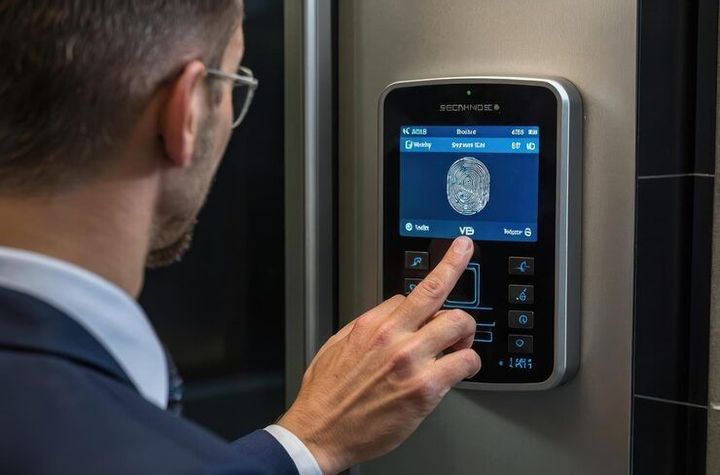
Biometric door access is an electronic entry system that uses a person's physical or behavioral characteristics to verify identity before allowing access to a controlled area. Common technologies include fingerprint recognition, facial recognition, iris scanning, and palm or vein recognition. Unlike a conventional key, biometric door access connects the entry decision to an enrolled person's biometric characteristics.
The technology developed from earlier identification and access-control systems that relied on keys, passwords, cards, and PINs. As sensors and computing systems became more capable, biometric recognition became practical for offices, residential buildings, factories, laboratories, educational institutions, and other controlled environments. Modern systems can connect readers, electronic locks, controllers, software, and access records into one system.
How Biometric Door Access Works
A typical system follows several stages. First, an authorized person is enrolled by providing a fingerprint, facial image, iris pattern, or another supported biometric characteristic. The system processes the information and creates a digital biometric template.
When the person later approaches the door, the reader captures a new sample and compares it with the enrolled information. If the system determines that the presented biometric matches an authorized record, the controller can release the electronic lock.
The technology can operate as a single authentication factor or can be combined with another credential, such as a card or PIN. Multi-factor arrangements can provide an additional verification layer for areas requiring stronger access controls.
Importance
Biometric door access is relevant because conventional credentials can create practical access-control challenges. Keys and cards can be misplaced, while PINs can be disclosed or observed. A biometric system instead attempts to verify the person presenting the credential.
This approach can also make access records easier to associate with individual users. In an appropriately configured system, administrators can define which people are authorized for particular doors or areas and maintain records of access events.
Common Applications
Biometric access can be used in different environments depending on the security requirements and operating conditions.
- Offices may use fingerprint or facial recognition for employee entry.
- Factories may use biometric readers at controlled production areas.
- Residential buildings may use biometric systems at selected entrances.
- Laboratories may restrict particular rooms to authorized personnel.
- Data centers may combine biometrics with cards or PINs for higher-security areas.
- Educational institutions may use controlled access for administrative or restricted spaces.
The appropriate technology depends on factors such as the number of users, traffic volume, environmental conditions, privacy requirements, and the importance of the area being protected.
Biometric Door Access Compared With Conventional Methods
| Access Method | Credential Type | Common Limitation | Typical Use |
|---|---|---|---|
| Mechanical key | Physical key | Can be lost or duplicated | Homes and basic facilities |
| PIN | Knowledge-based | Can be disclosed | Doors, cabinets, restricted rooms |
| Access card | Physical credential | Can be lost or shared | Offices and buildings |
| Fingerprint | Biometric | Finger condition can affect reading | Offices and residential areas |
| Face recognition | Biometric | Lighting and privacy considerations | Offices and high-traffic entrances |
| Iris recognition | Biometric | Specialized hardware requirements | High-security environments |
| Palm or vein recognition | Biometric | Specialized readers | Controlled facilities |
Recent Updates
Greater Use of Contactless Recognition
One notable development during 2024–2026 has been increased interest in contactless biometric technologies. Facial recognition and some palm-based systems can verify a person without requiring physical contact with a sensor.
This can be useful in locations with frequent movement through an entrance. It also changes the privacy considerations because a camera-based system may capture biometric information without the same physical interaction required by a fingerprint reader.
Improved Processing and Liveness Detection
Modern biometric systems increasingly use improved image processing, artificial intelligence, and presentation-attack detection techniques. These technologies are designed to distinguish a genuine biometric presentation from certain attempts to use a photograph, replica, or other artificial representation.
However, biometric recognition is not infallible. Accuracy can be affected by lighting, sensor quality, environmental conditions, changes in a user's physical characteristics, or the quality of enrollment data. For this reason, system design should consider fallback authentication methods and operational conditions.
Integration With Building Systems
Another development is greater integration between biometric readers and broader building-management or security systems. A door reader can be connected to electronic locks, access-control software, monitoring systems, and event logs.
This allows administrators to manage permissions from a central system rather than configuring every door independently. Larger installations can therefore use different access rules for different groups, locations, and time periods.
Increasing Attention to Privacy
Biometric information requires particular attention because it is directly connected to an individual. Organizations deploying biometric door access increasingly need to consider what information is collected, why it is collected, where it is stored, who can access it, and how long it is retained.
In India, the Digital Personal Data Protection Act, 2023 and the Digital Personal Data Protection Rules, 2025 form an important part of the developing data-protection framework. The Rules were notified in November 2025 and provide requirements concerning areas such as notices and personal-data processing, with different provisions becoming applicable according to the notified implementation timeline.
Laws or Policies
In India, biometric door access can involve both data-protection requirements and building or fire-safety considerations. The exact obligations depend on the type of premises, the organization operating the system, the information being processed, and applicable local rules.
Digital Personal Data Protection
The Digital Personal Data Protection framework is particularly relevant when a biometric system processes information connected with identifiable individuals. Organizations should consider the purpose for collecting biometric information, appropriate notices, lawful processing requirements, security safeguards, and applicable rights and obligations.
The notified 2025 Rules provide that notices should be clear, standalone, and understandable and should explain the personal information being collected and the purpose for processing it. The Rules also establish a phased implementation framework.
Organizations should therefore avoid treating biometric enrollment as merely a hardware installation. Data governance is also part of the system design.
Building and Fire Safety
Access-controlled doors must also be considered within the broader building and fire-safety framework. India's National Building Code provides guidance covering building requirements, fire and life safety, electrical installations, information and communication installations, and other building systems. Local authorities and applicable building regulations can impose additional requirements.
A security door should not create an unsafe escape condition during an emergency. Door hardware, electronic locks, emergency release arrangements, fire-alarm integration, and evacuation routes need to be designed according to the applicable building and fire-safety requirements.
Data Security and Administration
Biometric systems should also have appropriate administrative controls. Access to enrollment records, biometric templates, audit logs, and system-management accounts should be limited to authorized personnel.
Regular system maintenance can include checking reader operation, reviewing access permissions, updating software, and removing access when a person's authorization ends. These practices can help keep the access-control database aligned with actual requirements.
Tools and Resources
Several tools can help administrators understand, operate, and assess biometric door access systems.
Access-Control Management Software
Management software can provide centralized administration for users, doors, schedules, permissions, and access records. Larger systems may allow administrators to create different access groups for different parts of a building.
Biometric Performance Reports
System reports can help administrators review successful and unsuccessful authentication attempts. These records may identify operational problems such as repeated failed scans or unusually high access-denial rates.
Identity and Access Policies
A written access-control policy can define who may be enrolled, who can approve access, how permissions are reviewed, and what happens when authorization changes. It can also establish procedures for lost credentials and biometric-reader failures.
Data-Protection Resources
Organizations operating in India can refer to resources from the Ministry of Electronics and Information Technology concerning the Digital Personal Data Protection Act and Rules. The official government materials provide information about the framework and its implementation.
System Assessment Checklists
A basic assessment checklist can cover:
- Type of biometric technology.
- Number of doors and users.
- Indoor or outdoor installation.
- Lighting and environmental conditions.
- Enrollment and verification procedures.
- Backup authentication methods.
- Electronic lock and emergency-release arrangements.
- Data storage and retention practices.
- Administrator permissions.
- Audit-log management.
- Software and firmware maintenance.
FAQs
What is biometric door access?
Biometric door access is an electronic access-control method that verifies a person using a biometric characteristic such as a fingerprint, face, iris, or palm pattern before allowing entry.
What types of biometric door access are commonly used?
Fingerprint and facial recognition are widely used, while iris and palm or vein recognition are used in more specialized environments. Each technology has different requirements related to sensors, environmental conditions, privacy, and operating procedures.
Is biometric door access more secure than a key or card?
Biometric authentication can reduce certain risks associated with lost, borrowed, or shared physical credentials because the system attempts to verify the person rather than only the credential. However, security depends on the complete system, including enrollment, liveness detection, access policies, software, electronic locks, and administration.
Can biometric door access work without internet access?
Some systems can perform authentication locally using information stored on the reader or an associated controller. Other systems depend more heavily on networked software. The operating model therefore depends on the system architecture and configuration.
What security factors should be considered with biometric door access?
Important factors include biometric accuracy, presentation-attack detection, fallback authentication, data protection, administrator permissions, audit records, physical door security, emergency release, and system maintenance. Privacy requirements should also be considered when biometric information is collected and processed.
Conclusion
Biometric door access uses physical or behavioral characteristics to verify people before allowing entry to controlled areas. Fingerprint, facial, iris, and palm or vein technologies each have different operating characteristics and suitable applications. Modern systems increasingly combine biometric readers with centralized software, electronic locks, audit records, and other security technologies. In India, data-protection requirements and building and fire-safety considerations are important parts of planning and operating such systems.