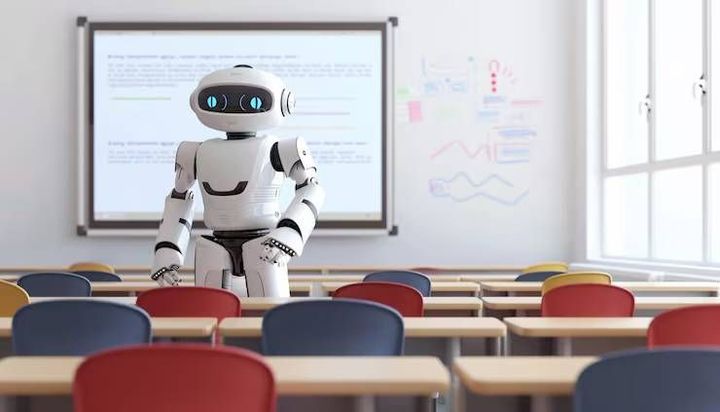
AI in Education Guide: Technologies, Teaching Methods, Applications and Learning Benefits
Artificial intelligence (AI) in education refers to the use of computer systems that can analyze information, recognize patterns, generate content, or respond to users to support teaching and learning. AI in education includes technologies such as adaptive learning platforms, intelligent tutoring systems, automated assessment tools, learning analytics, speech recognition, and generative AI.
The idea of using computers to support education has developed over several decades. Early educational software mainly provided programmed exercises and basic feedback. As machine learning, natural language processing, and data analysis developed, educational technologies became capable of responding to different types of learner input and adapting learning materials.
Today, AI can be used across schools, universities, vocational programs, and online learning environments. It does not replace the educational relationship between teachers and students. Instead, AI can become one component within teaching methods that also include classroom discussion, practical activities, reading, writing, collaboration, and direct teacher guidance.
Core AI Technologies Used in Education
Several technologies are commonly associated with AI in education:
- Adaptive learning systems can adjust questions or learning materials according to a learner's responses and progress.
- Natural language processing can help systems understand written or spoken questions and generate responses.
- Generative AI can produce drafts, explanations, examples, summaries, practice questions, and other learning materials.
- Learning analytics can examine educational data to identify patterns in participation, assessment results, or learning progress.
- Speech recognition can support language learning, transcription, pronunciation activities, and accessibility.
- Computer vision can be used in selected educational applications involving images, diagrams, or physical activities.
The usefulness of these technologies depends on the quality of the underlying data, the design of the learning activity, and the level of human oversight.
Why AI in Education Matters
AI in education matters because learners have different backgrounds, levels of preparation, learning speeds, and educational needs. A classroom may contain students who understand a concept quickly alongside others who need additional examples or practice.
AI applications can support differentiated learning by presenting additional explanations, practice exercises, or alternative formats. For teachers, AI can also assist with certain repetitive academic tasks, allowing more attention to classroom interaction, assessment interpretation, and student support.
However, AI also creates challenges. Generated information can contain errors, biased assumptions, or incomplete explanations. Students may also rely on generated answers without developing their own reasoning skills. Privacy, academic integrity, accessibility, and unequal access to technology are additional concerns.
UNESCO's AI competency frameworks emphasize human agency, ethics, critical thinking, AI knowledge, and responsible use for both students and teachers. The student framework identifies competencies across human-centred thinking, AI ethics, AI techniques and applications, and AI system design.
Who Can Be Affected
AI-based educational technologies can affect several groups:
- Students may encounter AI through tutoring systems, learning platforms, language tools, assessment systems, and generative AI.
- Teachers may use AI for lesson preparation, learning materials, feedback, assessment support, and professional learning.
- Parents may encounter AI through digital learning platforms used by children.
- Schools and universities may use learning analytics and digital systems to understand educational activity.
- Education authorities may use technology to support curriculum development, teacher training, and wider access to learning resources.
The effect is not the same for every learner. Access to suitable devices, reliable internet, language support, digital literacy, and teacher guidance can influence how educational AI is experienced.
Recent Developments in AI in Education
From 2024 through 2026, AI in education has increasingly moved from general discussion toward questions about practical classroom use, teacher competencies, assessment, privacy, and responsible implementation.
UNESCO released AI competency frameworks for teachers and students in 2024. The teacher framework describes 15 competencies across five areas: human-centred thinking, AI ethics, AI foundations and applications, AI pedagogy, and AI for professional learning. The framework is intended as a reference for teacher development and education systems.
The student framework similarly focuses on developing the ability to understand, apply, and create with AI while maintaining attention to ethics, critical judgment, privacy, and human responsibility.
Generative AI and Teaching Methods
Generative AI has become an important part of recent discussions about teaching methods. Teachers can use it to create draft lesson explanations, examples, questions, writing prompts, or differentiated learning materials. Students can encounter it as a tool for brainstorming, explanation, language practice, or comparing different approaches to a question.
The educational value depends on how the activity is designed. For example, asking students to evaluate an AI-generated explanation can develop fact-checking and critical-thinking skills, while simply copying an AI-generated answer may provide little opportunity for independent reasoning.
AI Education in India
India's National Education Policy 2020 identifies artificial intelligence, machine learning, adaptive computer testing, and other emerging technologies as areas requiring educational and technological research. It also identifies AI as a contemporary subject that can be introduced at relevant stages of education.
Recent initiatives have continued this direction. The Ministry of Education held the PadhAI conclave on AI in education, where discussions covered AI's role in school and higher education, critical thinking, Indian-language applications, and institutional challenges.
| Area | Example AI Application | Educational Purpose |
|---|---|---|
| Learning | Adaptive practice | Adjust practice to learner progress |
| Teaching | Lesson drafting | Prepare educational materials |
| Assessment | Automated feedback | Support review of selected assignments |
| Language | Speech and text tools | Practice communication and languages |
| Accessibility | Voice and text conversion | Support different learning needs |
| Analytics | Learning progress analysis | Identify patterns in participation |
| Research | Information organization | Help structure research activities |
Laws and Policies Shaping AI in Education in India
AI in education in India is influenced by education policy, data protection rules, institutional policies, and technology-related regulations.
The National Education Policy 2020 provides a policy foundation for technology integration in education. It emphasizes research and evaluation of technology before wider adoption and identifies AI, machine learning, adaptive testing, and other technologies as relevant to future education systems.
Data protection is another important consideration because educational platforms can process information about students, teachers, and families. India's Digital Personal Data Protection Act, 2023 contains specific provisions concerning children's personal data, including requirements relating to verifiable parental consent and restrictions on certain forms of tracking and behavioural monitoring.
The Digital Personal Data Protection Rules, 2025 were notified in November 2025 with a phased commencement schedule. Some provisions took effect upon publication, while other provisions have later commencement periods. The Data Protection Board of India was also established through a government notification.
For educational institutions, this means that the collection, handling, retention, and use of student information should be considered when implementing AI-based systems. Institutional rules may also determine how AI can be used for assignments, examinations, research, and academic assessment.
Tools and Resources for AI in Education
A range of educational resources can help learners and educators understand AI and digital learning. The appropriate tool depends on the educational level, subject, learning objective, and institutional requirements.
Learning Platforms and Educational Resources
SWAYAM and SWAYAM Plus provide online learning resources covering subjects from school education to higher education and emerging technologies. SWAYAM Plus has also introduced AI-focused learning initiatives and courses for educators and learners.
DIKSHA provides digital educational content and assessment-related resources for students and teachers within India's school education ecosystem. Its platform supports lesson revision, practice activities, and access to additional learning materials.
For understanding responsible AI use, UNESCO's AI competency frameworks provide structured guidance for both teachers and students. They can also help educators think about AI literacy, ethics, critical thinking, and classroom applications.
Useful educational resources can include:
- Digital textbooks and curriculum materials
- Online assessment and practice platforms
- AI literacy courses
- Teacher training materials
- Learning analytics dashboards
- Accessibility tools
- Academic research databases
- Institutional AI-use policies
- Digital privacy and data protection guidance
The role of these resources is to support learning rather than remove the need for human teaching, judgment, or academic responsibility.
Frequently Asked Questions About AI in Education
What is AI in education?
AI in education is the use of artificial intelligence technologies to support teaching, learning, assessment, educational content, accessibility, or analysis of learning information. Examples include adaptive learning, intelligent tutoring, generative AI, speech recognition, and learning analytics.
What are the main AI technologies used in education?
Common AI technologies include machine learning, natural language processing, generative AI, speech recognition, computer vision, adaptive learning systems, and learning analytics. Their applications vary according to the subject, age group, and educational setting.
How can AI teaching methods support students?
AI-supported teaching methods can provide additional explanations, practice questions, feedback, language support, and different forms of learning material. Teachers can combine these capabilities with discussion, projects, practical activities, and direct instruction.
What are the learning benefits of AI in education?
Potential learning benefits include additional practice opportunities, personalized learning materials, accessibility support, faster feedback in selected activities, and exposure to AI literacy. These benefits depend on appropriate implementation and human oversight rather than the technology alone.
Is AI allowed in Indian schools and universities?
There is no single rule that determines every use of AI across all Indian educational institutions. AI use can be shaped by national education policy, data protection requirements, institutional rules, examination policies, and individual assignment guidelines. Students and educators therefore need to consider the rules that apply to their particular institution and activity.
Conclusion
AI in education combines artificial intelligence with teaching, learning, assessment, accessibility, and educational research. Technologies such as adaptive learning, generative AI, natural language processing, and learning analytics are creating new ways to support educational activities while also introducing questions about privacy, accuracy, academic integrity, and human responsibility. In India, the National Education Policy 2020 and recent AI and data-protection developments provide an important policy context for these technologies. The continuing role of teachers, critical thinking, ethical awareness, and appropriate oversight remains central to how AI is used in education.